Case Studies•April 13, 2026
From Data Overload to Decision Advantage: How Mithrl Is Breaking the Analysis Bottleneck

Mithrl
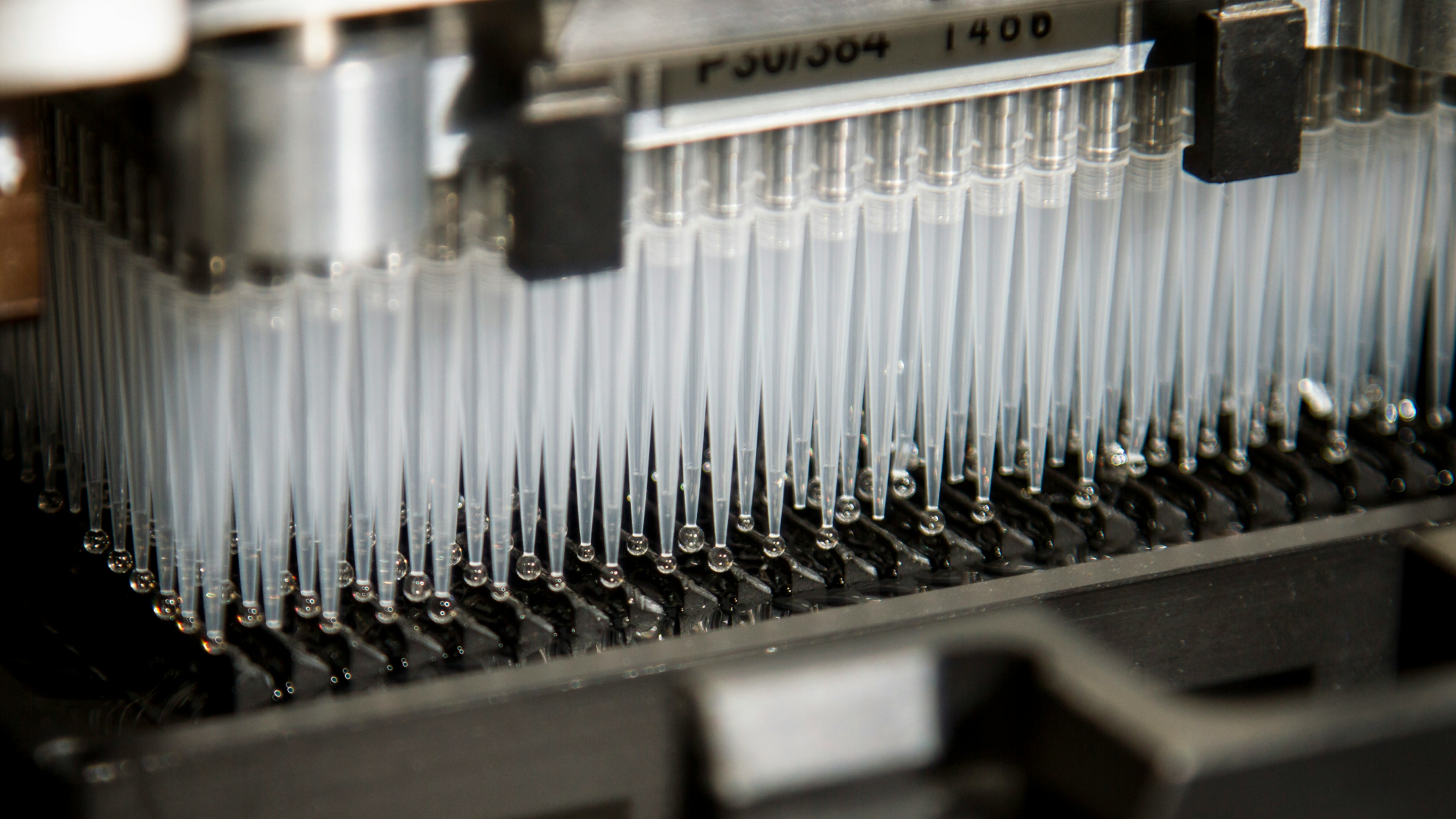
Mithrl addresses this analysis bottleneck by reducing analysis timelines from 8-10 weeks to under one week for a large biopharma, quickly unlocking decision-ready insights
Advances in platforms like 10x Genomics have dramatically accelerated the generation of high-quality sequencing data, allowing teams, such as those at a leading “Gene Therapy Biotech,” to explore biology at an unprecedented scale. However, this progress has shifted the challenge downstream; data is now being generated faster than it can be interpreted.
“The bottleneck in biology is no longer data generation - it’s interpretation. ”
Across the biotech and pharma industries, teams are increasingly overwhelmed by data, struggling to extract timely, actionable insights. Computational scientists and bioinformaticians are often stretched thin, becoming a critical point of failure, while wet lab scientists wait weeks, or even months, for answers. The result is a growing gap between data and decision-making, slowing discovery, delaying experiments, and leaving valuable data underutilized.
This is the exact challenge a leading Gene Therapy Biotech company faced as it attempted to scale its research efforts.
Drowning in Data, Starved for Insight
The team at a leading publicly traded Gene Therapy Biotech, developing adeno-associated virus (AAV) gene therapies across multiple disease areas, was generating large volumes of single-cell and single-nucleus RNA sequencing data to evaluate transgene expression and safety profiles. However, despite this wealth of data, their ability to extract insight was constrained by traditional bioinformatics workflows, such as complex analyses, which required deep programming expertise and extensive manual effort. Turnaround times stretched from weeks to months, limiting the speed of iteration and decision-making.
The main bottleneck: The reliance on specialized bioinformaticians creates a bottleneck for wet lab scientists, extending turnaround times from weeks to months, limiting the speed of iteration and decision-making, and reducing the ability of cross-functional teams to directly engage with their data. What should have been a driver of discovery had become a bottleneck.
“With Mithrl, what used to take me months can now be done in one day. Furthermore, our wet lab scientists, who don’t have programming experience, can now get tailored analysis results and insights themselves and this much faster.”
From Data to Decisions – In Days, Not Months
To overcome these constraints, the company adopted Mithrl’s Scientific Decision Engine, the Reasoning Layer for Biology. Unlike generic AI platform, Mithrl features a multi-agent system built on proprietary data schemas engineered for biological complexity, enabling consistent interpretation across heterogeneous data sources. Mithrl’s proprietary orchestration layer integrates three mission-critical capabilities:
- Ingestion pipelines for normalizing and harmonizing raw inputs.
- Computational biology workflows using validated methods
- Dynamic knowledge bases that surface institutional and scientific context.
Each capability is schema-validated with explicit provenance tracking to ensure every methodological choice is auditable and reproducible, without “black box” steps.
Adopting Mithrl has fundamentally changed the Gene Therapy Biotech’s workflow. Analyses that previously required weeks of expert effort can now be completed in hours or days. Setting up custom pipelines or reference genomes, once a time-intensive process, has become near real-time. More importantly, scientists across the organization, regardless of computational expertise, can now directly explore data, generate insights, and iterate on hypotheses.
“Closing the Gap Between Data and Decisions – Analysis Reduced from Months to Less Than One Week.”
From Workflow Bottleneck to Discovery Speed
The impact for Gene Therapy Biotech Company was structural rather than incremental. By removing the dependencies on manual, expert-driven workflows, the company eliminated a key bottleneck in its research process. Bioinformaticians are now free from routine support tasks to focus on higher-value scientific problems. Simultaneously, wet lab scientists have gained direct access to data, enabling faster exploration and more agile experimentation. The has dramatically shortened the feedback loop between data generation and decision-making; instead of waiting weeks for analysis, teams can now iterate in near real-time test hypotheses, refine experiments, and accelerate discovery.
The New Competitive Advantage Is no Longer Data – It’s Decision Velocity
This case study is a nice illustration of a broader shift that is happening across the life sciences. The new competitive advantage is no longer just about who generates the most data, but who can convert that data into confident decisions with the greatest velocity and highest confidence.
Mithrl’s Scientific Decision Engine is enabling this transition by introducing a new layer in the scientific stack. By connecting data directly to insight and action, it is effectively redefining how discovery happens.
The Future of Biology is Insight-Driven
As biological data continues to grow in scale and complexity, the gap between raw data and actionable insight will widen for organizations that rely on traditional approaches. Conversely, those that adopt AI-driven scientific reasoning will be able to move faster, iterate more effectively, and unlock the fullest potential of their data.
“The future of biology will not be defined by how much data we generate, but rather by how quickly we can understand it.”